Quick Answer: The junkyard usually wins on sticker price: a self-service yard often charges far less, sometimes half or less, than a matched used part ordered online. It saves more overall only when you know the exact part number, the yard is close, the part is easy to reach and store credit is acceptable. When the part depends on trim, engine or options, or your car is your only ride, a VIN-matched part ordered online often costs less in the end.
Your alternator just quit, the self-service yard across town lists one for about $40, and a matched used alternator online can cost twice that or more. You have a socket set, a free Saturday and a tight budget, so pulling it yourself looks like the obvious win.
The yard price looks unbeatable until you count the trip, the tools, the core charge and the part that turns out to be from the wrong trim. This guide is for the DIY driver weighing those two routes: the full cost of each, what must match, and when each one really saves money. If you have not confirmed the alternator is the culprit, start with the signs of a failing alternator.
Key facts
- A used alternator pulled at a self-service yard typically costs about $25 to $60 plus any core charge; a matched used OEM alternator online typically costs about $45 to $160.
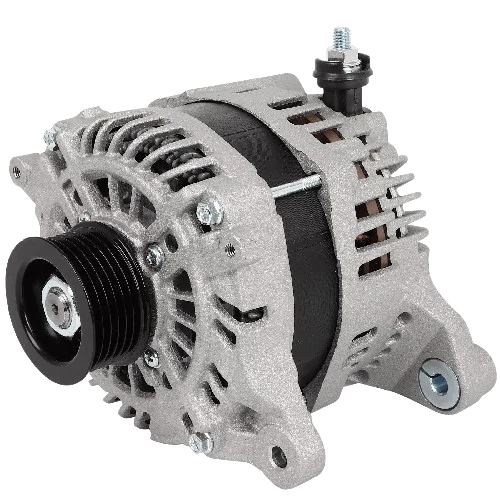
- Alternators for the same model can differ in amperage, pulley type, plug and mounting, depending on the engine and option packages such as towing or heavy duty electrical.
- Many self-service junkyards offer an exchange or store credit instead of a cash refund, so a wrong part pulled at a yard often costs a second trip.
- FirstChoice matches a used alternator to the VIN before payment, sends photos of the actual part, and ships nothing until the buyer approves those photos.
Is a Junkyard Part Really Cheaper Than a Used Part Ordered Online?
At the counter, yes: a self-service yard usually charges much less than a matched used part costs online, often half or less. Over the whole job the gap shrinks, and sometimes it flips. These are typical US market prices; the exact numbers depend on the vehicle, the yard and the seller.
| Part | Self-service yard, typical | Used OEM ordered online, typical | New dealer part, typical |
|---|---|---|---|
| Alternator | About $25-$60 plus core charge | About $45-$160 | About $250-$550 |
| Radiator, car or light truck | About $35-$90 | About $75-$400 | About $250-$1,100 |
| AC compressor | About $35-$90 plus core charge | About $80-$250 | About $350-$800 |
Yard prices are low because you supply the labor and carry the risk. Many self-service yards post one flat price per part type, whatever the donor’s year or mileage. An online price pays someone to pull, match, pack and ship the part, with written return or warranty terms. FirstChoice quotes used OEM parts at up to 70% less than a new dealer part, so the real question is whether the yard’s lower price survives the costs it leaves out.
What Does the Yard Price Leave Out?
The trip, your time, your tools and the cost of being wrong. None of them shows on the yard’s price board, but each one is real money or a real Saturday.
| Cost line | Self-service yard | Matched used part ordered online |
|---|---|---|
| Gate and core | Often a small admission fee; often a core charge on parts like alternators unless you bring your old one | Check the quote for any core charge |
| Shipping | None, you haul it home | Varies by seller; ask if it is included |
| Time | Gas, plus often half a day to find a donor, pull the part and get home | A few minutes to request a quote, then several days of waiting |
| Tools | Your own; anything you lack is an extra purchase | Only what the install needs |
| Wrong part | Another trip; often exchange or store credit, not cash | Replaced or refunded under the seller’s written policy |
| Warranty | Varies by yard: usually exchange or store credit within a set window, sometimes an optional paid warranty | Written terms; FirstChoice alternators carry 30 days, parts only |
The wrong part line decides most budgets. A mismatch usually means another drive and another pull, so keep the receipt and any mark the yard puts on the part. Online, the risk moves to the paperwork: our guide to reading a used auto parts quote shows which lines to get in writing.
What to bring to a self-service yard
- Hand tools: sockets with extensions, wrenches, a breaker bar, pliers and screwdrivers.
- A belt tool or long ratchet to release the serpentine belt tensioner before you pull an alternator or AC compressor.
- Helpers: penetrating oil, a pry bar, gloves, a flashlight, and a drain pan for a radiator.
- Your numbers: your VIN and a phone photo of the label on your old part.
Check the yard’s rules first. Many ban jacks, torches and open-toe shoes. Cars usually sit on stands, so you work from the ground with no lift, and a low-mounted part takes far longer than it would in a shop.
Why Does a Part From the Wrong Trim Not Fit?
Because one model can leave the factory with different alternators, radiators and compressors depending on the engine, transmission and options. Two cars of the same year and model can look identical in the yard row and still need different parts.
| What must match | Alternator | Radiator | AC compressor |
|---|---|---|---|
| Engine | Same engine; each engine can use its own alternator | Same engine and cooling package | Same engine; mounts and belt path change |
| Options | Amp rating, often higher with towing or heavy duty electrical packages | Automatic or manual; towing packages may use a thicker core | Model can change by engine and trim |
| Connections | Plug shape and pin count | Hose necks, cooler line fittings | Line ports, clutch or valve connector |
| Pulley and mounts | Pulley type, rib count, mounting ears | Mounting pins, shroud fit | Rib count, bolt pattern |
| Where to read it | Label on the case: part number and amps | Number on the tank | Label on the body |
Amperage is the classic alternator trap. A lower output unit may bolt on and seem fine on a short drive, yet fall short with the blower, headlights and rear defroster on at once, slowly draining the battery. Read the part number and amp rating on your old alternator before you leave, or get the factory number from your VIN; our guide to decoding your VIN for the right used part shows how.
The same logic applies to a used radiator. Many automatic cars carry a transmission cooler inside the radiator tank, so a radiator from a manual car of the same model can leave your cooler lines with nowhere to go.
Tip: If the car can sit for a day, pull your old part first. Holding the two side by side catches a wrong pulley, plug or mounting ear in seconds.
When Does Pulling the Part Yourself Save the Most?
The yard saves the most when the match is certain, the part is easy to reach and a wasted trip costs you little. If most of these describe you, the yard is likely the cheaper route.
- You know the part number and can match it to the label on a donor, not just the model name.
- The yard’s posted inventory shows several donors of your model and years, which is common for older, popular vehicles.
- The part is easy to reach, such as an alternator you can unbolt from above without removing other parts.
- The yard is close, and you have another vehicle, so a second trip costs an hour, not a workday.
Then have the pulled alternator bench tested before you install it. Many chain auto parts stores do it free in minutes, and a rough bearing or weak output is only cheap if you catch it first.
When Is a Matched Used Part Ordered Online the Better Deal?
Ordering online usually wins when the fit depends on trim or options, the part is hard to reach, or your car is your only way to work. The extra dollars buy a part matched to your VIN and written warranty terms instead of guesswork.
- The part changes with options, such as alternator amperage or a radiator cooling package.
- Your car is your only ride. Two wasted yard trips can cost more in missed work than the price gap.
- Access is hard: a low-mounted alternator is slow on your driveway and slower on the ground at a yard.
- No donor nearby: newer models and less common trims show up less often in self-service rows.
- A shop is installing it. Many shops decline customer-supplied parts or will not warranty their labor on them.
A used AC compressor is a special case. Even a cheap yard compressor needs the refrigerant recovered, a new receiver drier or accumulator, the right oil charge, a vacuum and a recharge by weight, which takes shop equipment. A yard donor’s AC lines are often cut open, letting moisture in. Since you pay a shop anyway, ask if it installs supplied parts, then start with a VIN-matched compressor.
For the alternator, price a used OEM alternator matched to your VIN and set it beside your yard total. If the gap is small, the matched part usually wins on time and certainty.
What Should You Check on a Used Part, at the Yard or in Photos?
Check that it is the right part and that nothing on it is broken, burned or soaked. At the yard you check with your hands. When you order from FirstChoice, the supplier photographs the actual part and nothing ships until you approve those photos, so the same checks happen on your screen.
- Label: part number and amp rating match your old alternator. Ask for a close-up if it is hard to read.
- Pulley: same type and rib count. A one-way clutch or decoupler pulley should freewheel in one direction and drive the shaft in the other.
- Plug and case: no melted or corroded connector, no burn marks, no cracked mounting ears.
- Oil: skip an alternator soaked by a leaking donor engine; oil inside can wear the brushes and bearings early.
- Radiator: no cracks or crust at the plastic tank seams, no crushed fins, fittings intact.
At the yard, also read the donor car. A front-end hit often damages the radiator and condenser, and a water line in the cabin is a reason to skip electrical parts. Spin an alternator pulley by hand: grinding or play means a worn bearing. For more, see how to check quality before buying used parts online.
How Does Ordering a Used Alternator From FirstChoice Work?
It takes five steps, and you see the actual part before it ships.
- Send your year, make, model and VIN, plus the part number or amp rating from your old alternator if you have it.
- A parts specialist matches it to your VIN before you pay and sends a free quote with the price, warranty term and shipping details.
- The supplier confirms the part is available and in good condition, pulls it and photographs it.
- You approve the photos. Nothing ships until you do.
- Delivery target is within 5 business days of photo approval, with tracking emailed within 2 days of shipment.
Alternators ship by tracked parcel to the billing address on your card, with a 30-day parts warranty; labor is not covered. FirstChoice does not install parts, so you or your mechanic do the swap. Start on the used alternator for sale page, or call 1-888-383-2439 for 10% off phone orders, Monday to Friday, 9 AM to 6 PM EST.
Frequently Asked Questions
Can I return a junkyard part if it does not fit?
Often only for an exchange or store credit, and only within the yard’s return window. Many self-service yards do not give cash refunds, and some sell an optional warranty at the counter. Read the posted return policy before you pay, and keep the receipt and any yard mark on the part so a return is accepted.
Do I need to bring my own tools to a self-service junkyard?
Yes. Self-service yards expect you to bring every tool and remove the part yourself. Pack sockets, wrenches, a breaker bar, a belt tool, penetrating oil and gloves. Many yards ban jacks and torches, so check the rules before you drive over.
Is a used alternator from a junkyard reliable?
It can be, but you rarely know the donor’s mileage or history. Spin the pulley for bearing noise, skip oil-soaked units and have it bench tested before you install it. Our guide on how long a used alternator lasts covers what wears out first.
Where do I find the part number on my alternator?
Look for a label or stamp on the alternator case, usually with the part number and amp rating. On an installed unit, a phone photo with a flashlight helps. If the label is gone, a dealer parts counter or a VIN-based quote can identify the correct alternator.
Will a mechanic install a part I pulled from a junkyard?
Some will, but many shops decline customer-supplied parts or will not warranty their labor on them, because a failure means doing the job twice. Ask before you buy any part. If the shop agrees, bring the part number and any written warranty terms so it can confirm the fit.
Related reading:
Best Places to Buy Used Auto Parts Online
Common Mistakes to Avoid When Buying Used Car Parts Online
OEM vs Aftermarket vs Used OEM Parts: Which to Buy