
Quick Answer: After hitting a deer, check more than the bumper cover. Behind it sit the AC condenser, radiator and cooling fan, with the headlights and hood latch close by, and a radiator with a cracked tank can seep for days before the engine overheats. Before you drive far, check for drips, the coolant level, both headlights, the hood latch and the temperature gauge, then have the cooling system pressure tested.
You hit a deer on a dark road this fall, pulled over, and the car still runs. The bumper cover is cracked, a headlight may be smashed, and you are about to pay a deductible or the whole bill yourself. The bumper is the damage you can see. The radiator and AC condenser behind it are the parts that can strand you a week later, miles from home.
This guide is for drivers who hit a deer in the fall rut and want to fix the car once, without buying parts twice. It covers what sits behind the bumper, what to check before you drive, why the cooling parts fail late, typical costs, when a claim pays off and how to match a used OEM radiator, condenser or headlight.
Key facts
- Deer collisions in the United States peak from October through December, during the deer mating season, and are most common around dawn and dusk.
- On most cars and trucks, the AC condenser and radiator sit just behind the grille, so a deer strike that cracks the bumper cover can damage both.
- A radiator damaged by a deer strike can seep slowly from a cracked plastic tank, and a cooling system pressure test can find that leak before the engine overheats.
- In the United States, hitting a deer is usually covered under comprehensive insurance, not collision, so the comprehensive deductible applies.
- FirstChoice matches a used OEM radiator, AC condenser or headlight to the VIN before payment, and each carries a 30-day parts warranty.
What sits behind the bumper cover, and what does a deer usually hit?
Behind the plastic bumper cover sit an energy absorber and a metal reinforcement bar, then the AC condenser, the radiator and the cooling fan on the radiator support, with a headlight at each corner. A deer’s body sits at or near hood height on most cars, so the hit usually lands on the grille, headlights and hood as well as the bumper, right in front of the cooling parts.
- Bumper cover, grille and absorber: cracked plastic, torn tabs, and a foam or plastic honeycomb absorber that should be replaced if it is crushed or cracked.
- Bumper reinforcement: if this metal beam is bent, the parts behind it were pushed too.
- Radiator support and hood latch: a bent upper tie bar can keep the hood from latching.
- AC condenser: a thin aluminum core right behind the grille, the first cooling part in line.
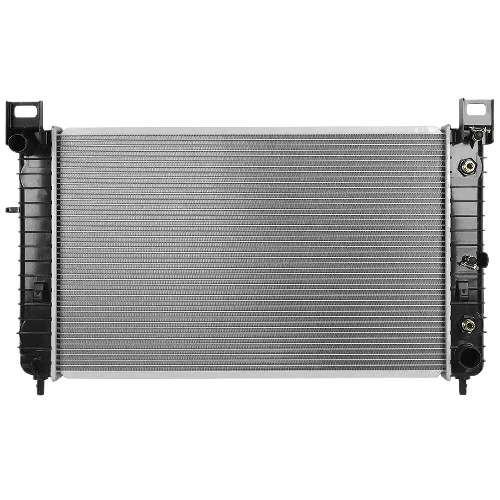
- Radiator: an aluminum core with plastic end tanks on most modern vehicles.
- Cooling fan and shroud: a radiator pushed back can crack the shroud or let the fan blades strike it.
- Headlights and sensors: broken lenses or tabs, parking sensors in the cover, and on many newer vehicles a radar sensor for adaptive cruise or emergency braking behind the grille emblem or lower bumper.
Is it safe to drive after hitting a deer?
Often yes, for a short trip, if nothing leaks, both headlights work, the hood latches and the temperature gauge stays normal. If any one of those fails, have the car towed. Start these checks with the engine cold and the car on level ground.
- Look under the front now and again after the idle test in step 6. Watery, sweet-smelling green, orange, pink or blue fluid is coolant from the radiator or a hose; oily red fluid on an automatic points to the transmission cooler lines. Thin blue fluid that smells like glass cleaner is usually the washer bottle.
- Check the coolant reservoir against the marks. Never open the radiator cap on a hot engine.
- Close the hood and pull up on its front edge. A hood that is not latched can fly up at speed.
- Test every light and shine the low beams on a wall. A beam aimed at the treetops or the pavement usually means a broken tab or a shifted housing.
- Pull on the bumper cover and splash shield, and secure anything that hangs.
- Idle with the AC on for 10 to 15 minutes. On most cars with an electric fan, the fan should run with the AC on or once the engine warms up. Listen for a ticking blade, and shut the engine off if the gauge climbs past normal.
- Check the steering and the dash. An airbag or collision system warning light means a shop should look first. A crooked steering wheel after a corner hit can mean a bent tie rod, control arm or bent steering knuckle, which an alignment alone will not fix.
Safety: If the temperature gauge climbs while you drive, pull over and shut the engine off. Driving an overheating engine, even a short distance, can warp a cylinder head or blow a head gasket, which costs far more than a radiator.
Why do the radiator and condenser fail days after the hit?
Because the damage is often a slow leak, not an open hole. A cracked plastic tank, a disturbed tank seam or a pinhole seeps only when the system is hot and under pressure, so the level drops a little each day until the engine overheats or the AC goes warm.
Most radiators have plastic end tanks crimped onto an aluminum core over a gasket. An impact can crack a tank or loosen the crimp, and the crack can grow with each heat cycle.
The condenser leaks refrigerant over days, and the AC simply gets warmer. Our guide to AC condenser damage after a front-end hit explains why recharging a leaking condenser can ruin a healthy compressor.
| What shows up later | Likely part | What the shop checks |
|---|---|---|
| Coolant level drops over days, sweet smell after driving | Cracked radiator tank, loose seam or damaged hose | Cooling system pressure test, UV dye |
| Gauge climbs at idle or in traffic, normal on the highway | Cooling fan, shroud or flattened radiator fins | Fan operation, blade contact, airflow |
| AC a little warmer every day | Condenser pinhole or loosened line fitting | AC gauge pressures, leak detector |
| Oily red fluid under the front, then late or harsh shifts from low fluid | Transmission cooler line or its fitting on the radiator | Line fittings, transmission fluid level |
Two tests to ask for before the body work starts
Ask the shop to pressure test the cooling system and check AC pressures, even if nothing drips yet. A pressure tester holds the system at its cap rating so a seeping tank shows itself, and AC gauges plus a leak detector show whether refrigerant is escaping. Both checks are quick.
How much does it cost to fix a car after hitting a deer?
It depends on how far back the damage goes. Bumper cover, grille and paint are body shop work, and each part behind them adds parts and labor. These are typical US market ranges, heavy duty and diesel trucks run higher, and the exact price depends on the vehicle.
| Part | Used OEM (typical) | New dealer part (typical) | Labor and extras (typical) |
|---|---|---|---|
| Radiator, car | $75-$250 | $250-$700 | 1 to 2.5 hours, plus coolant |
| Radiator, truck, SUV or van | $125-$400 | $400-$1,100 | 1.5 to 3 hours, plus coolant |
| AC condenser | $60-$250 | $200-$700 | 1 to 3 hours, plus a drier and AC recharge (about $150-$600) |
| Headlight, halogen | $75-$250 | $150-$500 | Under 1 hour, more if the bumper cover must come off |
| Headlight, HID or LED | $200-$900 | $500-$2,000 | Same, plus aiming; adaptive units cost more |
| Bumper cover, absorber, grille, paint | Body shop quote | Body shop quote | Varies with paint, sensors and trim |
Labor overlaps. On many cars the bumper cover comes off to reach the headlights, and the condenser comes out before the radiator. Replace every damaged cooling part and headlight while the front end is apart, and ask whether a front radar sensor needs calibration after the work.
File a claim or pay it yourself?
Do the math against your comprehensive deductible. With a $1,000 deductible and a $1,400 estimate, the claim pays $400. A used radiator for sale at up to 70% less than a new dealer part, plus a used condenser and headlight, can bring the job under the deductible. If you do file, your estimate may list used or recycled OEM parts; our guide to used OEM parts in insurance claims explains those lines.
What must match for a used radiator, condenser or headlight to fit?
Your VIN plus a few options: engine, transmission and cooling package for the radiator, refrigerant and drier style for the condenser, and lighting type for the headlight.
| Part | What must match | Why it matters |
|---|---|---|
| Radiator | Engine (size, turbo) and automatic or manual | Hose outlets, core thickness and the transmission cooler fittings many automatics have in one tank |
| Radiator | Towing or heavy duty cooling package | Can add a thicker core or an engine oil cooler |
| AC condenser | Refrigerant (R-134a or R-1234yf) and drier style | Fittings and the built-in or separate receiver-drier differ |
| Headlight | Halogen, HID or LED, plus leveling or adaptive features | Different connectors, modules and motors |
| All three | OEM part number on the label | Two parts for the same model year can still differ |
Our guide to decoding your VIN for the right used part shows what a specialist reads from it. If one headlight broke, a used OEM headlight from the same trim keeps both sides the same type and style (lens clarity can differ slightly from your older side), and a used AC condenser is matched on the same VIN.
What should you check in the photos before you approve the parts?
Check the radiator tanks and necks, the condenser for oily spots and the headlight for intact tabs and a clear lens. The supplier photographs the actual part, and nothing ships until you approve those photos, so ask for every side.
- Radiator tanks: no cracks, and no white, green or orange crust along the seam where plastic meets core. Crust marks an old leak.
- Radiator necks and fittings: necks unbroken, transmission cooler fittings straight with clean threads.
- Radiator core: fins mostly straight, no crushed area, no heavy corrosion.
- Condenser: no dented tubes and no dark, oily, dirt-caked spot.
- Headlight: all mounting tabs present, no cracks, no moisture inside the lens, connector intact.
- The donor car: ask whether it was hit in the front, if that is known. A radiator from a car hit in the rear carries less risk.
Photos cannot show a slow seep, so have the shop pressure test the radiator before the bumper goes back on. Our guide on checking used parts quality online covers more photo checks.
How does ordering used front end parts from FirstChoice work?
- Send your year, make, model and VIN for each part the shop found damaged, or call to quote several parts at once.
- A parts specialist matches each part to your VIN before you pay and sends the price, warranty term and shipping details. The quote is free.
- The supplier confirms the part is available and in good condition, then photographs the actual part.
- Nothing ships until you approve the photos.
- Delivery target is within 5 business days of photo approval, by tracked parcel to the billing address on your card.
Phone orders at 1-888-383-2439 get 10% off, Monday to Friday, 9 AM to 6 PM EST, or buy a used radiator through the free quote form. Your mechanic or body shop installs the parts, recharges the AC and calibrates any sensors.
Frequently Asked Questions
Does car insurance cover hitting a deer?
Usually, if you carry comprehensive coverage: hitting an animal is typically a comprehensive claim, and the comprehensive deductible applies. Swerving to miss the deer and hitting a tree or guardrail is usually a collision claim. Liability-only coverage does not pay for your own car. Check your policy, and photograph the damage and the scene.
Can I drive with a cracked radiator after hitting a deer?
Only a short distance, with the coolant topped up and your eyes on the temperature gauge. A cracked plastic tank gets worse with each heat cycle. Stop-leak products rarely hold on a cracked tank and can clog the heater core, so plan to replace the radiator rather than patch it.
Should I replace the radiator and condenser together after a deer hit?
Replace both only if both are damaged, but have both checked. On many cars the condenser comes out to reach the radiator, so replacing a damaged pair in one visit saves a second round of labor, coolant and AC recharge.
What if the airbags deployed when I hit the deer?
The repair is bigger and safety critical. Deployed airbags and any seat belt pretensioners that fired must be replaced, never reused, and the airbag control module often must be replaced or reset, depending on the maker. Have a qualified technician do that work. See are used airbags safe before you buy.
What warranty comes with a used radiator from FirstChoice?
Used radiators carry a 30-day parts warranty, and labor is not covered. They ship by tracked parcel to the billing address on your card. A damaged or incorrect part is replaced, or refunded in full if no replacement is available.
Related reading:
AC Condenser Damage After a Front-End Hit
Used OEM Parts in Insurance Claims
Decode Your VIN for the Right Used Part
How to Check Used Parts Quality Online