Quick Answer: Recycled or LKQ parts on a collision estimate are used original factory (OEM) parts taken from another vehicle. Most auto policies pay for parts of like kind and quality, so insurers can write them in place of new dealer parts. They are usually fine on bolt on parts such as headlights and mirrors when the part number and features match. Question them on airbags, seat belts, structural parts and sensors.
Your car is at the body shop, the adjuster’s estimate just landed, and next to the headlight it says LKQ, Used or Recycled. It sounds like junkyard parts on a car you are still paying off. In most cases it means an original factory part from another vehicle of the same model, and whether that is good news depends on which part it is and how carefully it is matched.
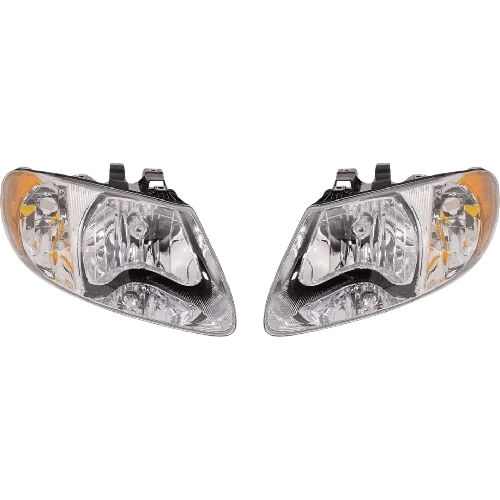
This guide is for drivers with an open claim and for the collision shops repairing to those estimates. It decodes the part codes, shows which parts are usually fine used, and lists the questions to ask the adjuster before the repair starts. A matched used OEM headlight is the running example.
Key facts
- On a collision estimate, a part line marked LKQ (like kind and quality), Used or Recycled usually means a used original factory part from another vehicle of the same model.
- Most auto policies pay to repair a car with parts of like kind and quality, which lets insurers write recycled OEM or aftermarket parts instead of new dealer parts.
- A recycled OEM headlight is the carmaker’s own design, so one matched by part number, lighting type and connector uses the same mounts and plug as the original.
- A used OEM halogen headlight assembly typically costs about $75 to $250 per side, and a used LED unit about $250 to $900, depending on the vehicle.
- FirstChoice matches each used OEM part to the VIN before payment and ships nothing until the buyer approves photos of the actual part.
What do OEM, A/M, LKQ and recycled mean on a collision estimate?
Each part line on an estimate carries a code for where the part comes from: new from the carmaker, new from another manufacturer, or used from a donor vehicle. Labels vary by estimating system (CCC, Mitchell, Audatex) and insurer, so ask the shop if a code is unclear.
| Code on the estimate | What it means | What it usually signals |
|---|---|---|
| OEM, New OEM | New part from the carmaker, usually through a dealer | Highest price, factory fit |
| A/M, Aftermarket, Non OEM | New part made by another company to fit your car | Lowest price on many body and lighting parts; quality varies by brand |
| CAPA or certified aftermarket | Aftermarket part certified by an independent program, such as CAPA, for fit and materials | More quality control, still not a factory part |
| LKQ, Recycled, Used | Original factory part removed from another vehicle | Factory fit at a lower price; condition depends on the donor |
| Opt OEM (optional OEM) or a similar label | New OEM part offered at a discount through a carmaker pricing program | New factory part priced closer to aftermarket |
| Recon, Reconditioned | Used part that has been repaired or refinished | Common for wheels and bumpers; ask what was done |
Labor lines and claim paperwork use their own shorthand:
- Repl: replace the damaged part. Rpr: repair the existing one.
- R&I: remove a good part to reach the damage, then reinstall it.
- Sublet: work sent out, such as an AC recharge, alignment or camera calibration.
- Supplement: an added estimate for hidden damage or a part that had to change.
Why does your insurer write recycled OEM parts on the estimate?
Because most auto policies only promise to repair the car with parts of like kind and quality, and a recycled OEM part usually meets that standard for less than a new dealer part.
Whether it is allowed on your claim depends on your policy and your state. Many states require the estimate to identify aftermarket (non OEM) parts, some add rules for newer vehicles, and some insurers sell an OEM parts endorsement. Two points work in your favor: in most states you choose the repair shop, and the shop decides whether a part that shows up is fit to install. If a recycled headlight arrives with broken tabs, the shop can reject it and send a supplement.
Is a recycled OEM part a good thing on your repair?
For most bolt on parts, yes: a matched recycled OEM part is the same factory design as the part that broke. Safety restraints, structural parts and sensors need more questions first.
| Part on the estimate | Recycled OEM verdict | What to ask or check |
|---|---|---|
| Headlight assembly | Usually fine | Same lighting type and part number; tabs, lens and seal intact; aimed after install |
| Side mirror | Usually fine | Same features (heat, signal, blind spot light, fold, camera); cap color or paint labor |
| AC condenser or radiator | Ask first | A pinhole leak does not show in photos; new aftermarket can cost about the same |
| Airbags and seat belts | Push back unless the shop agrees | OEM part number, never deployed, never a belt worn in a crash |
| Structural parts: rails, pillars, reinforcements | Push back | What the carmaker’s repair procedure allows |
| Radar sensors and cameras | Ask first | Exact part number, and calibration written on the estimate |
Our guide to OEM vs aftermarket vs used OEM parts compares all three by part type. On airbags, read whether used airbags are safe before you agree to anything.
Safety: Airbags, seat belts, steering and brake parts must be installed by a qualified technician. Many carmakers require seat belts worn during a crash to be replaced, even when they look fine, and a belt whose pretensioner fired must never be reused.
What does each option typically cost on a front end estimate?
Recycled OEM usually lands between aftermarket and new dealer prices, and far below dealer on LED lighting and feature heavy mirrors. These are typical US prices for the part alone; the exact price depends on the vehicle.
| Part | New dealer OEM (typical) | New aftermarket (typical) | Recycled OEM (typical) | Labor (typical) |
|---|---|---|---|---|
| Halogen headlight, each | $150-$500 | $50-$200 | $75-$250 | 0.5-3 hours |
| LED headlight, each | $500-$2,000 | $200-$700 where made | $250-$900 | 0.5-3 hours |
| Power heated side mirror | $200-$450 | $40-$120 | $50-$175 | 0.5-1.5 hours |
| Side mirror with camera | $700-$1,500 or more | Rarely made | $250-$700 | 0.5-1.5 hours |
| AC condenser | $200-$700 | $50-$250 | $60-$250 | 1-3 hours, plus recharge |
Labor is usually about the same whichever part goes in, so the part price is where the claim saves money, though a recycled cap or panel in another color adds paint time. If you want new OEM and your policy pays for recycled, ask whether you can pay the difference. FirstChoice quotes used headlights for sale at up to 70% less than a new dealer part, and the quote is free.
What must match for a recycled headlight, mirror or condenser to fit?
The VIN, the OEM part number and every option that changes the part must match. Most estimates show an OEM part number on the part lines (if a recycled line does not, ask the shop for it), and a parts specialist confirms trim and options from the VIN. Our guide on decoding your VIN for the right used part shows what the VIN can tell you.
- Headlight: side, lighting type (halogen, HID or LED), connector and pin count, and features such as adaptive (swiveling) beams and auto leveling. An LED unit will not simply plug into a halogen car.
- Side mirror: side, heat, power fold, turn signal, blind spot light, camera and cap finish. More pins at the door plug usually means more features.
- AC condenser: engine and cooling package, refrigerant type (R-134a or R-1234yf), line fittings and whether the receiver drier is built in.
- Paint code: a recycled mirror cap or panel in another color needs refinish labor on the estimate.
Mid year changes are the usual trap: a headlight from the same model year can have a moved tab or a different plug, so the part number beats the year. For the condenser, see our guide to condenser damage after a front end hit.
What should you check in the photos before a recycled part goes on?
Check that the part number matches the estimate line and that nothing is cracked, broken or fogged. With FirstChoice, nothing ships until you approve photos of the actual part, so a bad unit is rejected before the car sits waiting. For a recycled headlight, look at:
- Label: readable, with the same OEM part number as your estimate or quote.
- Mounting tabs: every tab whole, with no glue or old tab repairs. Broken tabs are a common flaw on lights pulled from wrecked cars.
- Lens: no cracks or chips. Light haze can be polished; a crack cannot.
- Inside the housing: no water drops, fog or water lines, which point to a broken seal or vent.
- Back of the housing: connector, vent caps and aim adjusters intact; on HID and LED units, whether the ballast or driver module is included.
For a mirror, check the glass, cap color, camera lens and the wire left past the plug. Condenser photos show bent fins, crushed tubes and oily stains, but not a pinhole leak, so the shop should confirm the system holds vacuum or pressure before recharging. Our guide on checking quality before you buy used parts online covers other parts.
What should you ask the adjuster before you sign off on the estimate?
Ask which lines are recycled or aftermarket and what happens if those parts turn out wrong:
- Which part lines are recycled, aftermarket or new OEM, and why was each one chosen?
- If a recycled part arrives damaged, does not fit or cannot be found at the estimate price, will you approve a supplement?
- Does my policy or state let me require new OEM parts, or can I pay the difference?
- Are any airbags, belts, structural parts or sensors written as recycled, and is sensor calibration included?
- If I am claiming against the other driver’s insurer, do the same parts rules apply?
Get the answers in writing. After a deer strike or other front end hit, our list of front end parts to check after hitting a deer helps you spot damage the first estimate missed.
How does ordering a used OEM part from FirstChoice work?
Shop or driver, the steps are the same:
- Send the year, make, model and VIN, plus the OEM part number from the estimate if you have it.
- A parts specialist matches the part to the VIN before you pay and sends the price, warranty and shipping details. The quote is free.
- The supplier confirms the part is available and in good condition, pulls it and photographs it.
- Nothing ships until you approve the photos.
- Delivery target is within 5 business days of photo approval, by tracked parcel to the billing address on the card, with tracking emailed within 2 days of shipment.
Parcel parts go to the billing address on the card, so a shop should order on its own card. Drivers: ask the shop first, because some shops do not install customer supplied parts or will not warranty that work. Phone orders at 1-888-383-2439 get 10% off, Monday to Friday, 9 AM to 6 PM EST, or buy a used headlight through the free quote form. A used OEM side mirror or used AC condenser is quoted the same way.
Frequently Asked Questions
Can I refuse recycled parts on my insurance estimate?
You can object, but the insurer usually pays only for parts of like kind and quality as your policy defines them. Ask whether your state limits recycled or aftermarket parts on your vehicle, whether you have an OEM parts endorsement, and whether you can pay the difference for new OEM.
Will recycled parts void my new car warranty?
Not by themselves. Under the federal Magnuson-Moss Warranty Act, a carmaker generally cannot void your warranty just because recycled or aftermarket parts were used, though it can deny a claim if it shows that part caused the damage. The FTC explains these warranty rules.
Who warranties a recycled part used in an insurance repair?
Usually two parties: the supplier warrants the part and the shop stands behind its work. From FirstChoice, a used headlight, mirror or condenser carries a 30 day parts warranty, and labor is not covered. A damaged or incorrect part is replaced, or refunded in full if no replacement is available.
What happens if the recycled part does not fit or arrives damaged?
The shop rejects it and sends the insurer a supplement for another recycled part or a different part type, such as new OEM. Matching by VIN and part number, and approving photos before shipping, avoids that delay. Rental coverage often has a daily and total limit, so lost days can cost you.
Will the insurer put a recycled airbag or seat belt in my car?
It can appear on an estimate, so ask first. A replacement airbag should be an OEM part with a matching part number that has never been deployed, and many carmakers require belts worn in a crash to be replaced. Many shops will not install recycled restraints. See NHTSA’s airbag information.
Related reading:
Are Used Airbags Safe? The Complete Safety Guide
How to Check Quality Before Buying Used Auto Parts Online
How to Read a Used Auto Parts Quote Before You Pay
Hit a Deer? Front End Parts to Check and Replace