- The unit matches your year, model, engine, and drivetrain exactly.
- The mileage is confirmed by the source yard — not guessed.
- The fluid shows no black color or metal contamination.
- The unit was running normally at the time of removal.
- You understand any programming requirements before installation.
- A warranty is included.
- The seller can answer specific questions — not just give you a price.
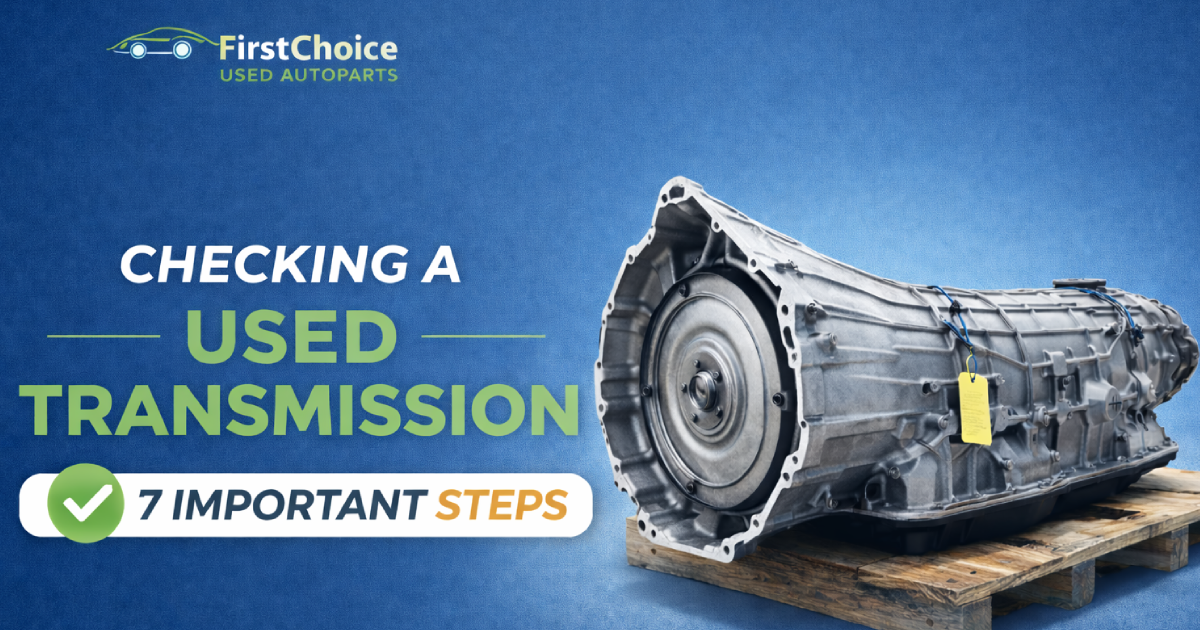
A used transmission is one of the larger purchases in DIY car repair — typically $750–$1,800 for the unit alone. The difference between a great outcome and a costly mistake almost always comes down to what you verified before clicking “order” or picking up the phone.
We’ve shipped thousands of used transmissions across the country. The calls we get from frustrated customers almost always trace back to one of the same 7 mistakes. This guide walks through each one so you don’t make them.
The 7 Things to Check Before Buying a Used Transmission
1 Confirm Exact Compatibility — Year, Model, Engine, AND Drivetrain
Most buyers get the year and model right. The ones who get burned usually miss one of these:
- Engine variant: A Ford F-150 6R80 from a 5.0L V8 truck has a different internal torque rating than the 6R80 from a 3.5L EcoBoost. They look identical externally.
- 4×4 vs. 4×2: The rear output shaft housing is entirely different. A 4×4 transmission will not bolt up correctly on a 2WD vehicle, and vice versa.
- AWD vs. RWD: Some Ford Explorers and GM SUVs have AWD-specific transmissions even though the body style looks identical to a 2WD model.
- Diesel vs. Gas (Ford Super Duty, RAM 2500/3500): The valve body programming is different between diesel and gas variants of the same transmission model number.
The safest approach: give the seller your 17-character VIN. A good used parts supplier will decode it to confirm the exact factory transmission code for your vehicle before quoting.
2 Confirm Mileage Is Verified — Not Estimated
There is a significant difference between “approximately 95,000 miles” and “confirmed 95,341 miles verified against the odometer.” Any reputable yard tracks mileage against the vehicle title and physical odometer reading at the time of intake.
Ask directly: “Is the mileage on this unit confirmed from the donor vehicle’s odometer, or is it an estimate?”
If the answer is “it should be around X” — that’s a red flag. Estimated mileage typically means the yard is buying in bulk from auctions and has incomplete records.
3 Ask About the Fluid Condition
Transmission fluid is the single best indicator of internal health. Before any unit ships from a reputable yard, someone should be able to tell you what the fluid looked like when the unit was pulled.
| Fluid Appearance | What It Means | Action |
|---|---|---|
| Red/pink and clear | Well-maintained, regular services | ✅ Good to buy |
| Light brown | Normal age — acceptable | ✅ Acceptable — flush at install |
| Dark brown/black | Overheated or severely neglected | ⚠️ Scrutinize further |
| Black with metallic sheen | Active internal wear/metal particles | ❌ Do not buy |
| Milky/foamy | Coolant contamination (cooler failure) | ❌ Do not buy |
4 Confirm the Unit Was Running Normally at Removal
This is the most important question and the one most buyers forget to ask: “Was the transmission running normally — no slipping, no codes, no complaints — when the donor vehicle was dismantled?”
Many salvage yards buy wrecked vehicles where the transmission was fine but the vehicle was totaled from body damage. That’s an ideal source. But some buy vehicles specifically because the transmission failed, with the intention of selling the other components. A transmission that was slipping before removal will slip after installation.
Legitimate yards keep intake notes on each vehicle. If the transmission had a complaint, that should be disclosed.
5 Understand Programming Requirements Before Installation
Some modern transmissions require a PCM/TCM adaptation or relearn after installation. Ordering a used transmission without knowing this leads to an expensive miscommunication with your shop.
| Transmission | Programming Required? |
|---|---|
| Ford 10R80 (F-150 2018+, Mustang, Ranger) | Yes — PCM adaptive relearn required |
| GM 10L80 (Silverado/Sierra/Camaro 2017+) | Yes — TCM relearn recommended |
| RAM/Dodge ZF 8HP75 (RAM 1500 2013+, Charger) | Yes — PCM adaptive reset required |
| Ford 6R80, 6R140 TorqShift | No programming — drive relearn cycle only |
| Dodge 68RFE, 66RFE | No programming — drive relearn cycle only |
| Nissan CVT (Jatco) | No programming — confirm fluid spec |
| Nissan RE5R05A, RE7R01A | No programming required |
| Toyota A340, A750 (Tacoma, 4Runner) | No programming required |
Tell your shop what transmission is being installed. A good shop already knows — but confirming ahead of time prevents a “surprise” add-on labor charge after the job is done.
6 Get a Warranty — In Writing
A reputable used parts seller stands behind their units. The industry standard for used transmissions is 30–90 days covering defects upon delivery. This typically means: if the unit arrives damaged, is the wrong part, or has a pre-existing internal failure that presents within the warranty period, you get a replacement or refund.
What a warranty does NOT cover:
- Damage caused during installation
- Failure due to incorrect fluid type being used
- Units installed by non-licensed shops (in most cases)
- Normal wear at mileage above what was disclosed
If a seller offers zero warranty on a used transmission, walk away. That is not a normal or acceptable offer for this type of part.
7 Test the Seller’s Knowledge
A seller who can tell you exactly which transmission model you need by year and engine, explain the fluid specification, and answer “was it running when pulled” has proper sourcing and documentation. A seller who can only give you a price and a mileage is guessing.
Ask these three questions:
- “What is the specific transmission model number or code for my vehicle?” (e.g., 6R80, 68RFE, JF011E)
- “What condition was the fluid in when this unit was pulled?”
- “Was this transmission running normally in the donor vehicle?”
If the seller can’t answer all three, your risk goes up significantly.
Red Flags: When to Walk Away
- Seller cannot confirm mileage from the odometer — only “estimates”
- No warranty offered at all
- Cannot answer whether the unit was running normally when removed
- Fluid described as black or with metal shavings
- Price is 40%+ below market average — often signals salvage auction units with no documentation
- Seller recommends you “just replace the filter and fluid and it’ll be fine” on a unit with unknown history
What Happens After You Order
Once you confirm compatibility, verify mileage, confirm the unit’s running history, and get your warranty in writing — here’s what the installation process typically looks like:
- Shipping: Most used transmissions ship via freight on a pallet. Delivery is typically 2–5 business days to most of the continental US.
- Receiving inspection: When the unit arrives, inspect it before your shop touches it. Look for shipping damage, external fluid leaks, and confirm the part number matches what was ordered.
- Fresh fluid and filter: Always install a new filter and fill with the correct transmission fluid spec before startup. Never reuse old fluid with a used transmission.
- PCM relearn (if required): Confirm with your shop before the first test drive — especially on Ford 10R80 and ZF 8HP units.
- Test drive and scan: After installation, a quality shop will run a full shift test through all gear ranges and scan for codes before releasing the vehicle.
Frequently Asked Questions
How do I know if a used transmission is any good?
Confirm these five things: (1) the mileage is verified from the donor vehicle odometer, (2) the fluid was clean — red/brown, not black or milky, (3) the unit was running normally in the donor vehicle at time of removal, (4) it comes with a written warranty, and (5) the seller can answer specific technical questions about your vehicle’s transmission code. Any seller who can’t answer these questions poses higher risk.
Is it worth buying a used transmission or should I go with a rebuilt one?
For vehicles under 130,000 miles that don’t do heavy towing, a quality used transmission from a verified low-mileage source is typically the better economic choice — saving $800–$2,000 over a rebuilt unit. For high-mileage vehicles or those used for consistent heavy towing, a remanufactured unit with an upgraded valve body may be worth the premium.
How many miles is acceptable on a used transmission?
We target donor vehicles under 100,000 miles for the best results. Units from 100,000–130,000 miles are acceptable if the service history is clean. Above 130,000 miles, look for documentation of maintenance and no towing history. Mileage alone doesn’t tell the whole story — use history matters as much as the odometer reading.
What is the most common mistake people make when buying a used transmission?
Not confirming the drivetrain configuration (4×4 vs. 4×2) and engine variant. A 4WD transmission will not install correctly on a 2WD vehicle, and certain transmission model numbers have different internal specs depending on the engine they came from. Always provide the seller with your full VIN rather than just year, make, and model.
Do I need to tell my shop the transmission is used?
Yes — and specifically tell them the transmission model code and whether a PCM adaptive relearn is required. For modern transmissions like the Ford 10R80, RAM ZF 8HP75, and GM 10L80, failing to perform the relearn causes shift quality complaints that get mistakenly blamed on the used unit.
What warranty should I expect on a used transmission?
Industry standard is 30–90 days covering defects. Some suppliers offer up to 6 months on certain units. Zero warranty is a red flag. Extended warranties (1+ year) are typically only offered with remanufactured units.